Genuin

Every feedback entry now links straight to the conversation it belongs to. A new icon on each row of the Feedback page opens the Conversations page at the exact conversation the rated answer came from.

Jump from a rating to its full context

The Feedback page already shows the query, the answer and the content behind each rating — enough to spot most problems. But when an answer is wrong and the reason isn't obvious from the single turn, the context matters: what the user asked before, how the exchange evolved, which model and content were in play across the whole thread.

The new icon removes the manual hunt. Instead of copying the query and searching for it in Conversations, you click through from the feedback row and land directly on the matching conversation, opened at the right point.

The link icon on a feedback row, opening the matching conversation

This is most useful on negative feedback: from the rating you reach the full thread in one click, see the turn in its context, and decide what to fix in the knowledge base — or what to report to Visup.

Genuin

Two additions to the Knowledge area of Genuin Studio: synonym groups to make search understand that different words mean the same thing, and feedback from the anonymous web widget, so ratings left by end users on Support answers now flow back into the platform.

Synonyms

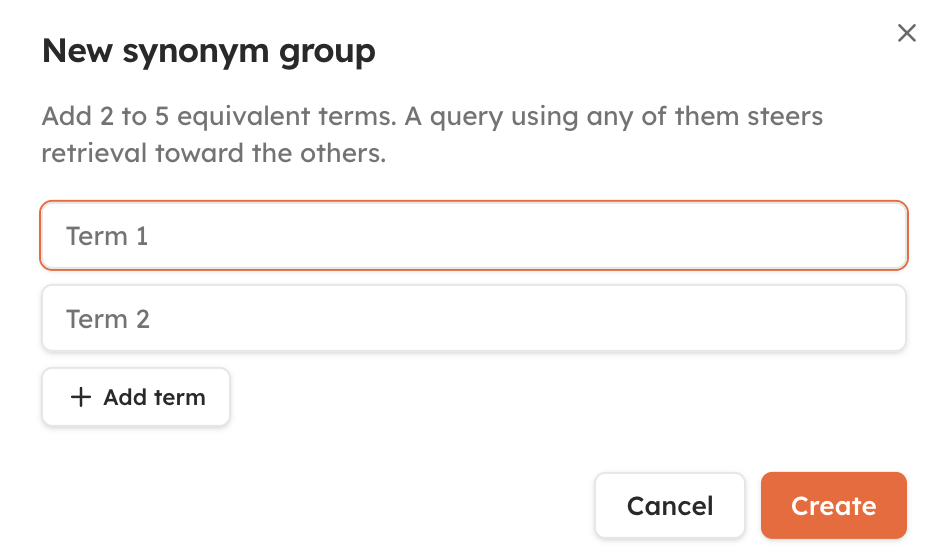
The Synonyms page lets realm admins define groups of interchangeable terms. Every word in a group is treated as equivalent at query time, so a search matches the relevant content regardless of which term the end user typed — useful whenever the wording in the manuals differs from the wording customers actually use (caldaia / boiler, centralina elettronica / scheda / cpu, an acronym and its expansion, dialect or trade slang, and so on).

From the page you can:

  • Create a group and add its terms
  • Edit an existing group — add or remove terms, fix a typo
  • Delete a group you no longer need
  • Import groups in bulk from an .xls file, when defining them one by one would be impractical

Each term accepts up to 4 synonyms, but retrieval stays sharpest when a group holds no more than 2 — beyond that the equivalences get looser and matches less precise, so keep groups tight and split unrelated meanings into separate groups.

The Synonyms page with groups of interchangeable terms

Feedback from the anonymous widget

Answers served through the anonymous web widget — the embeddable Support widget, e.g. the one on the company website — can now be rated by the end user: thumbs up or thumbs down, and on a negative rating an optional free-text note explaining what was wrong.

Those ratings are collected in the Feedback page in Genuin Studio, alongside feedback from the other channels. Each entry records the type (positive / negative), the source content the answer was built from, the machine model, the query, the answer, the user's note, and the channel it came from, with headline counters for total, positive and negative feedback and a filter by type.

The Feedback page collecting ratings from every channel

This closes the loop on the knowledge base: negative feedback points straight at the query, the answer and the content behind it, so gaps or wrong passages can be found and corrected — and clearly reproducible failures can be reported to Visup.

Import/export md document

by Gabriele Venier
Genuin

Documents can now be exported and imported as Markdown: download the text of a document, refine it however you like — by hand or with an AI agent — and upload it back to the platform. The original file never has to be touched.

Why it matters

Until now, correcting the text of a document meant deleting it, fixing the source file (often a 100+ page PDF), and uploading it all over again. That is slow and expensive: a new OCR pass, the wait for reprocessing, and the risk of losing what had already been set up — the links between text and figures, and the machine models associated with the document, sometimes assigned by hand.

Markdown import/export removes that detour. The document keeps its identity: same figure references, same linked models, same history. Only the text changes.

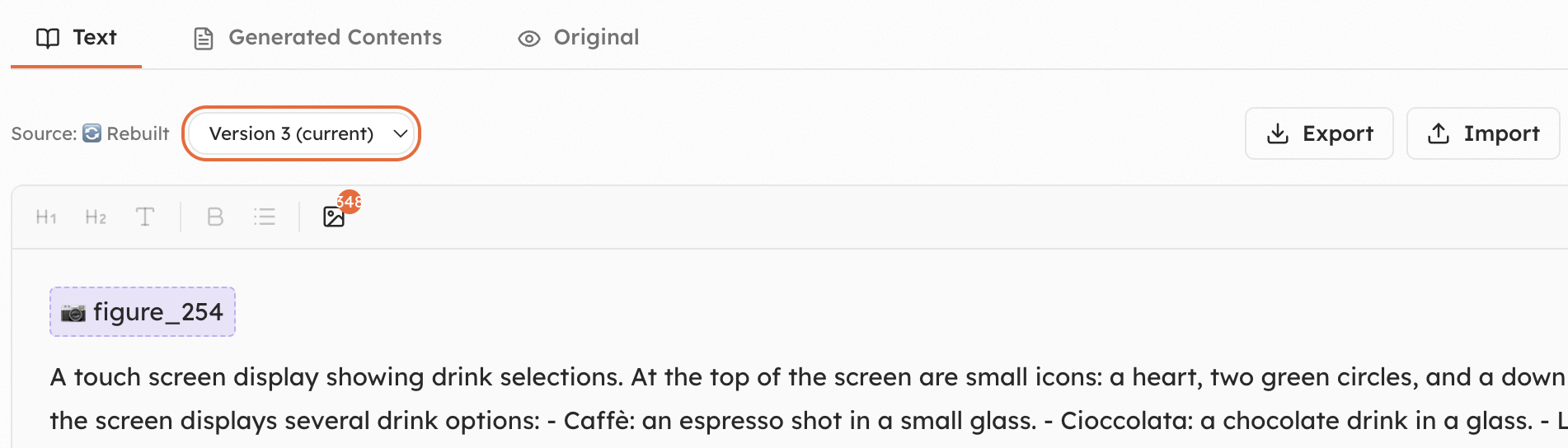
The Text tab of a document, with the Export and Import actions

Export, refine, import

From the Text tab of any document:

  • Export — download the current version as a .md file. Figure placeholders such as figure_254 travel with the text and stay anchored to the same images.
  • Refine — open it in any editor, or hand it to an AI agent: fix OCR artefacts, rewrite image descriptions, reorder or merge sections, normalise terminology, clean up a manual that was never meant to be read by a machine.
  • Import — upload the .md file back into the editor and review the result before saving.

Every save creates a new version

When you press Save, the platform:

  • increments the document version
  • reprocesses the content and splits it into sections again
  • recomputes the embeddings, so assistants start answering on the updated text right away

Not happy? Go back

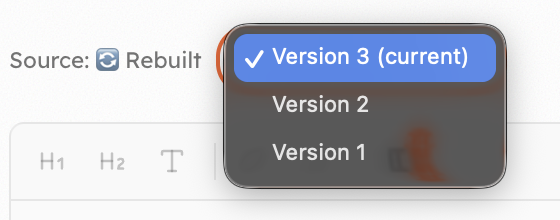
Nothing is lost along the way. Use the version selector at the top of the Text tab to compare an earlier version and restore it — the reprocessing simply runs again on the version you choose.

The version selector on the document

Machine custom attributes

by Gabriele Venier
Connect

Machines can now have custom attributes: additional information specific to each individual machine, such as the SIM number, testing outcome, internal asset codes, or the contract expiration date. Fields are defined once at the machine model level and become available on every machine of that model.

Define the fields on the model

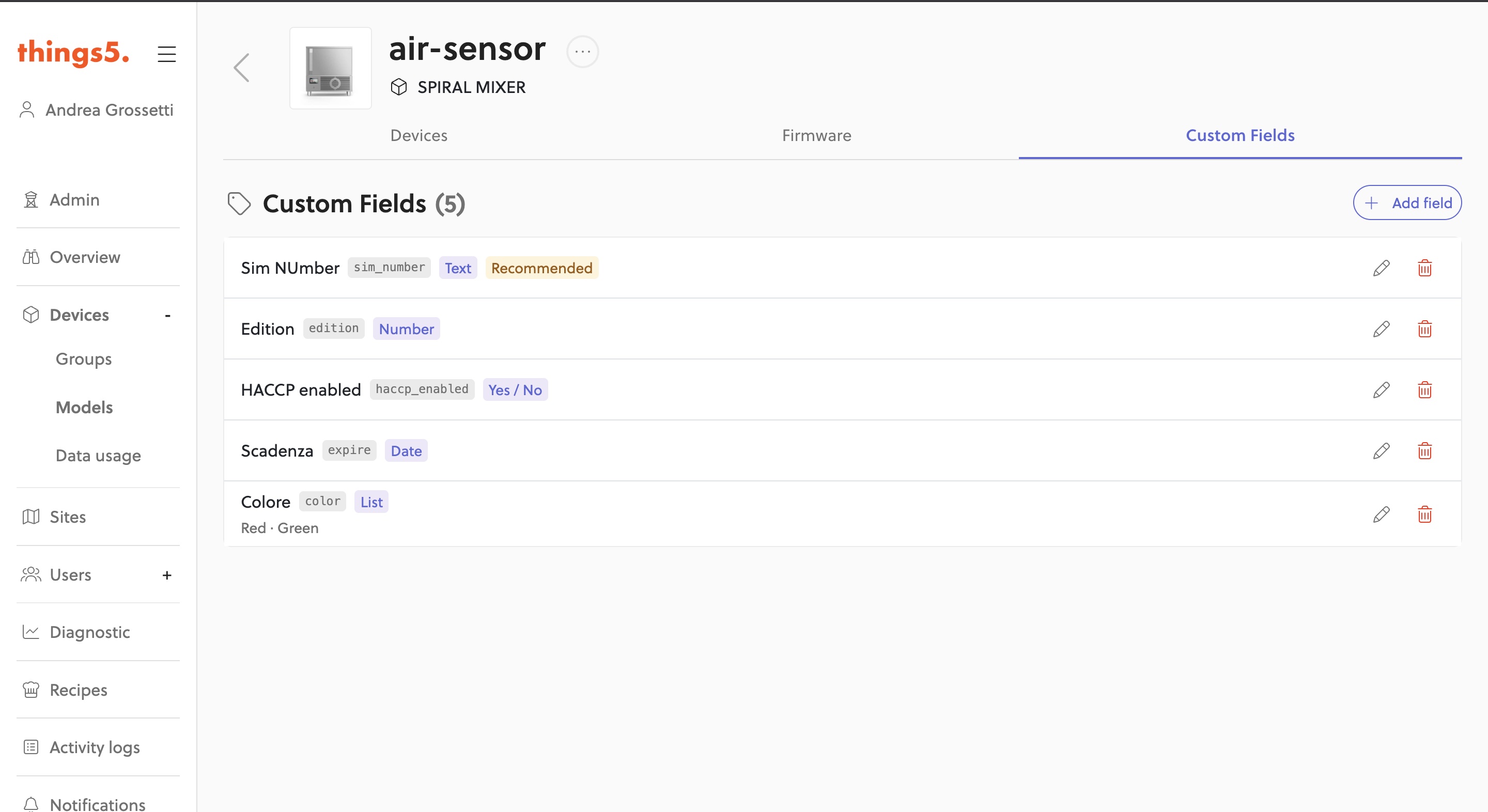
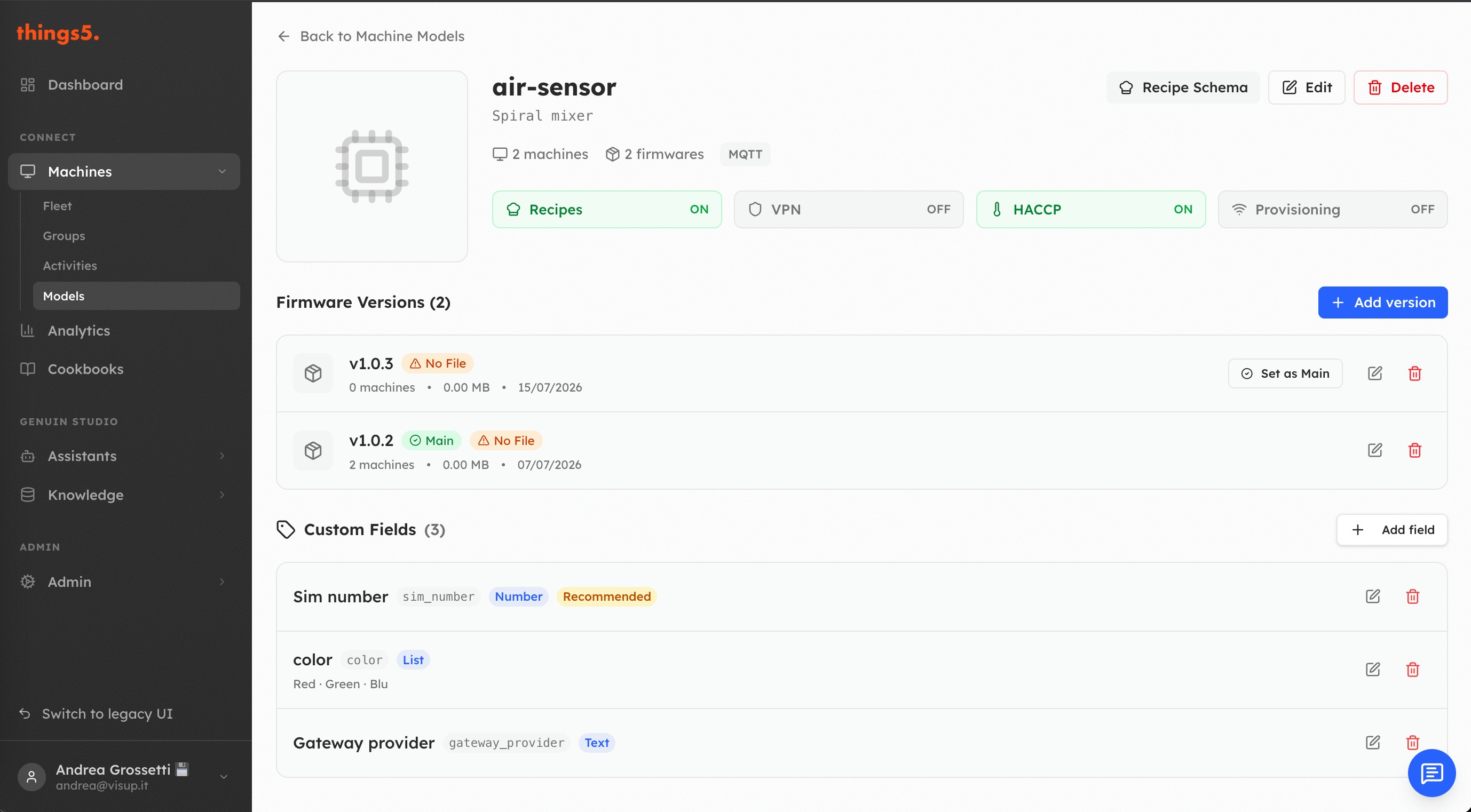
From the machine model page, administrators can add typed fields in the new Custom Fields tab:

  • Text — free-form values (e.g. an internal code)
  • Number — numeric values (e.g. the SIM number)
  • Yes / No — boolean toggles (e.g. "Tested")
  • List — a fixed set of options, each with a localizable label per language
  • Date — calendar dates (e.g. the contract expiration)

Fields marked as Recommended show a reminder on machines where they are left empty, without ever blocking the save.

The custom fields defined on the model

The custom fields defined on the model

Fill them in right from machine creation

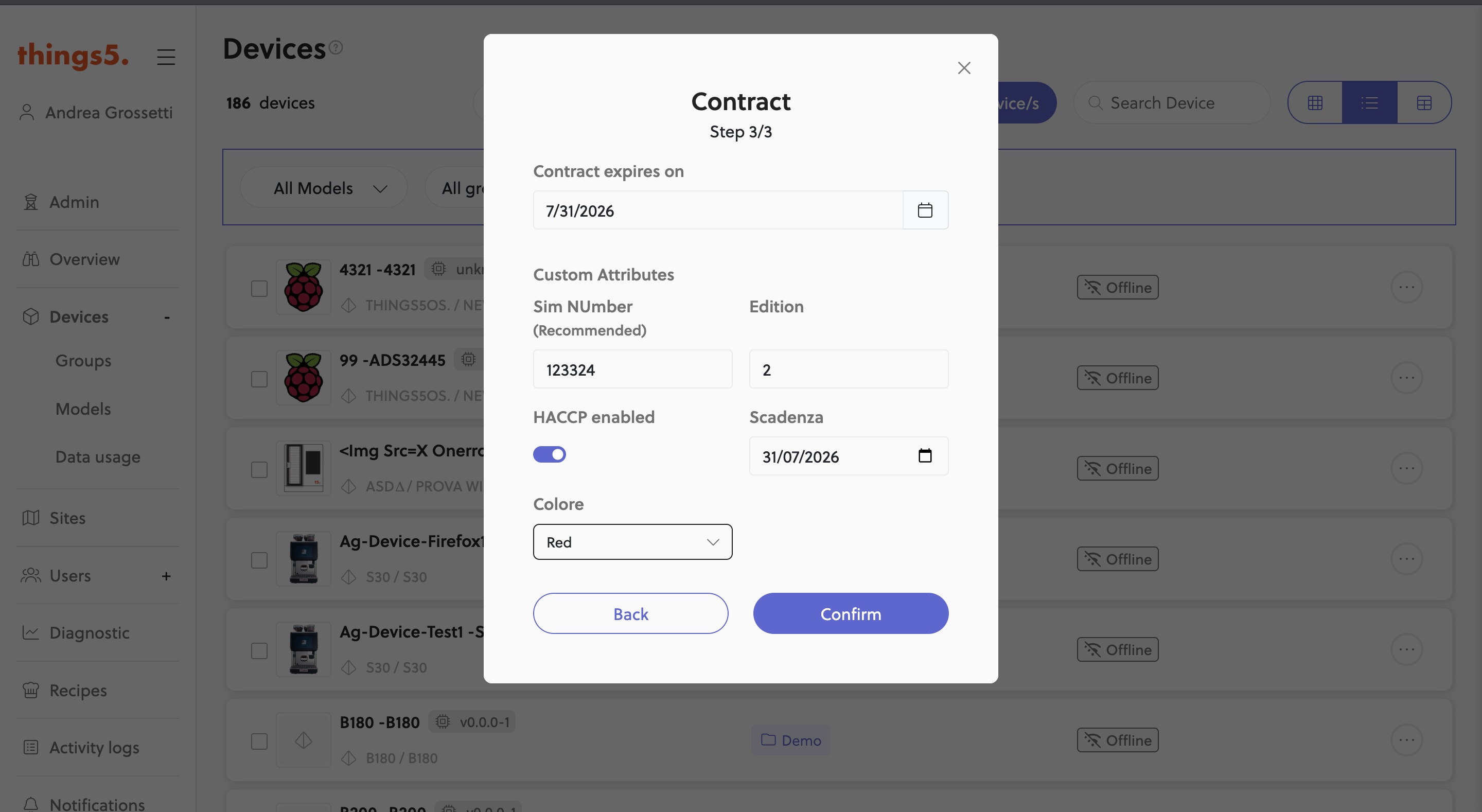
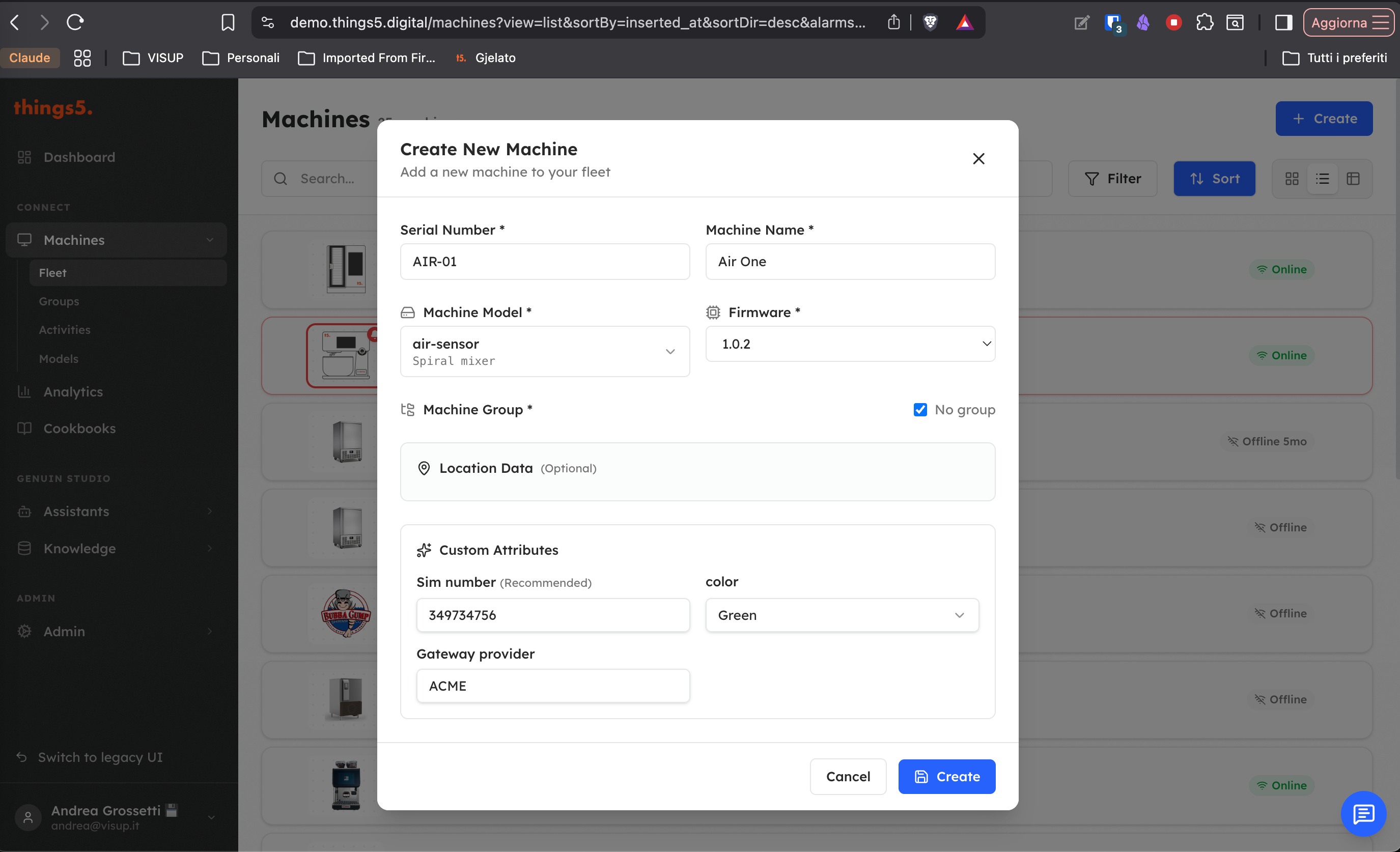
When you create a new machine, its custom attributes appear directly in the last step of the creation wizard: machines start out complete with all their data.

Custom attributes in the machine creation wizard

Custom attributes in the machine creation wizard

View and edit them from the machine detail

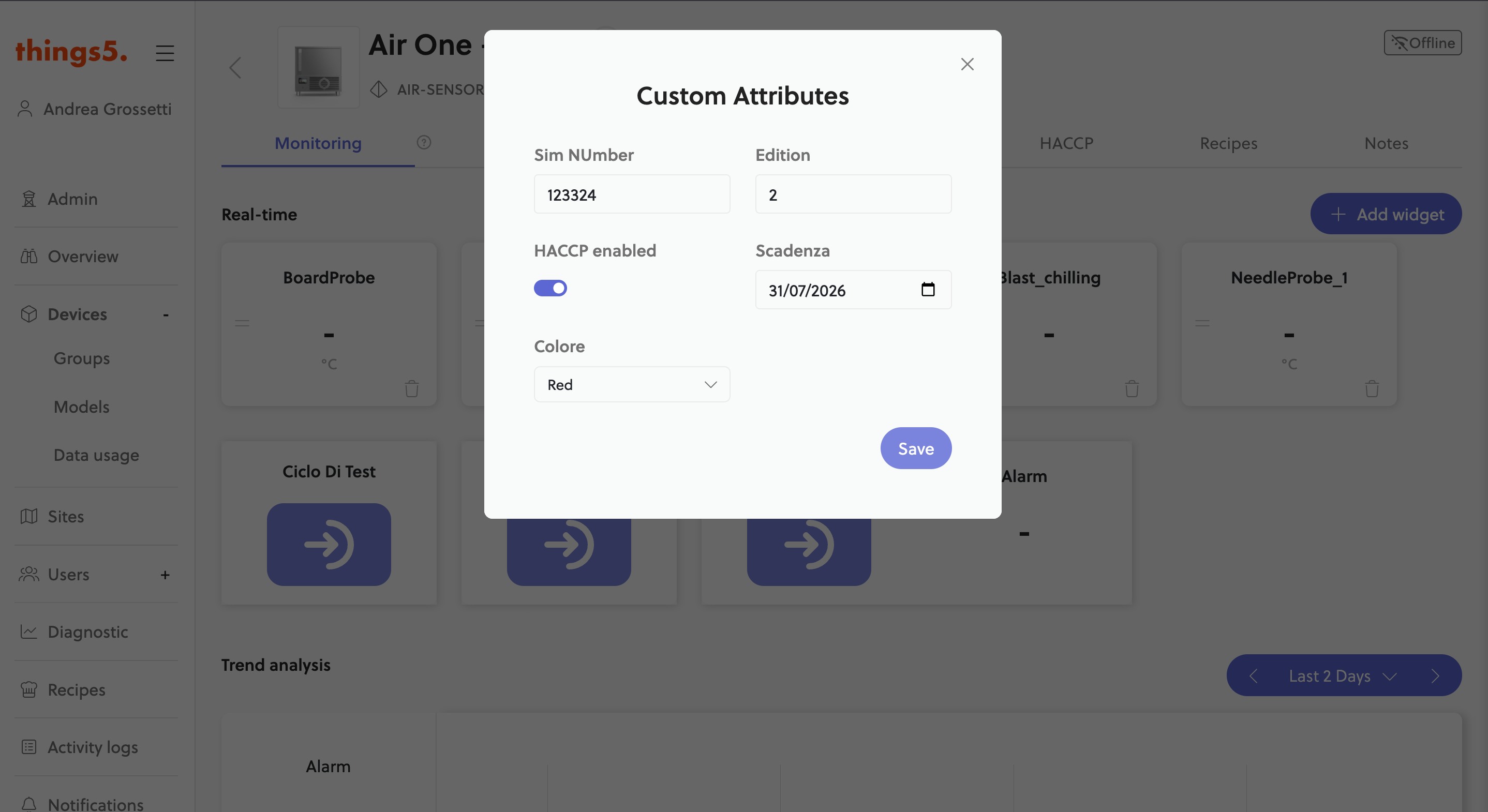
From the machine detail page you can open the Custom Attributes dialog to view and update the values at any time.

The attributes filled in from the machine detail

The attributes filled in from the machine detail

Machine custom attributes

by Gabriele Venier
Connect

Machines can now have custom attributes: additional information specific to each individual machine, such as the SIM number, testing outcome, internal asset codes, or the contract expiration date. Fields are defined once at the machine model level and become available on every machine of that model.

Define the fields on the model

From the machine model page, administrators can add typed fields in the new Custom Fields section:

  • Text — free-form values (e.g. an internal code)
  • Number — numeric values (e.g. the SIM number)
  • Yes / No — boolean toggles (e.g. "Tested")
  • List — a fixed set of options, each with a localizable label per language
  • Date — calendar dates (e.g. the contract expiration)

Fields marked as Recommended show a reminder on machines where they are left empty, without ever blocking the save.

The custom fields defined on the model

The custom fields defined on the model

Fill them in right from machine creation

When you create a new machine, as soon as you select the model its custom attributes appear directly in the creation form: machines start out complete with all their data.

Custom attributes in the machine creation form

Custom attributes in the machine creation form

View and edit them from the machine detail

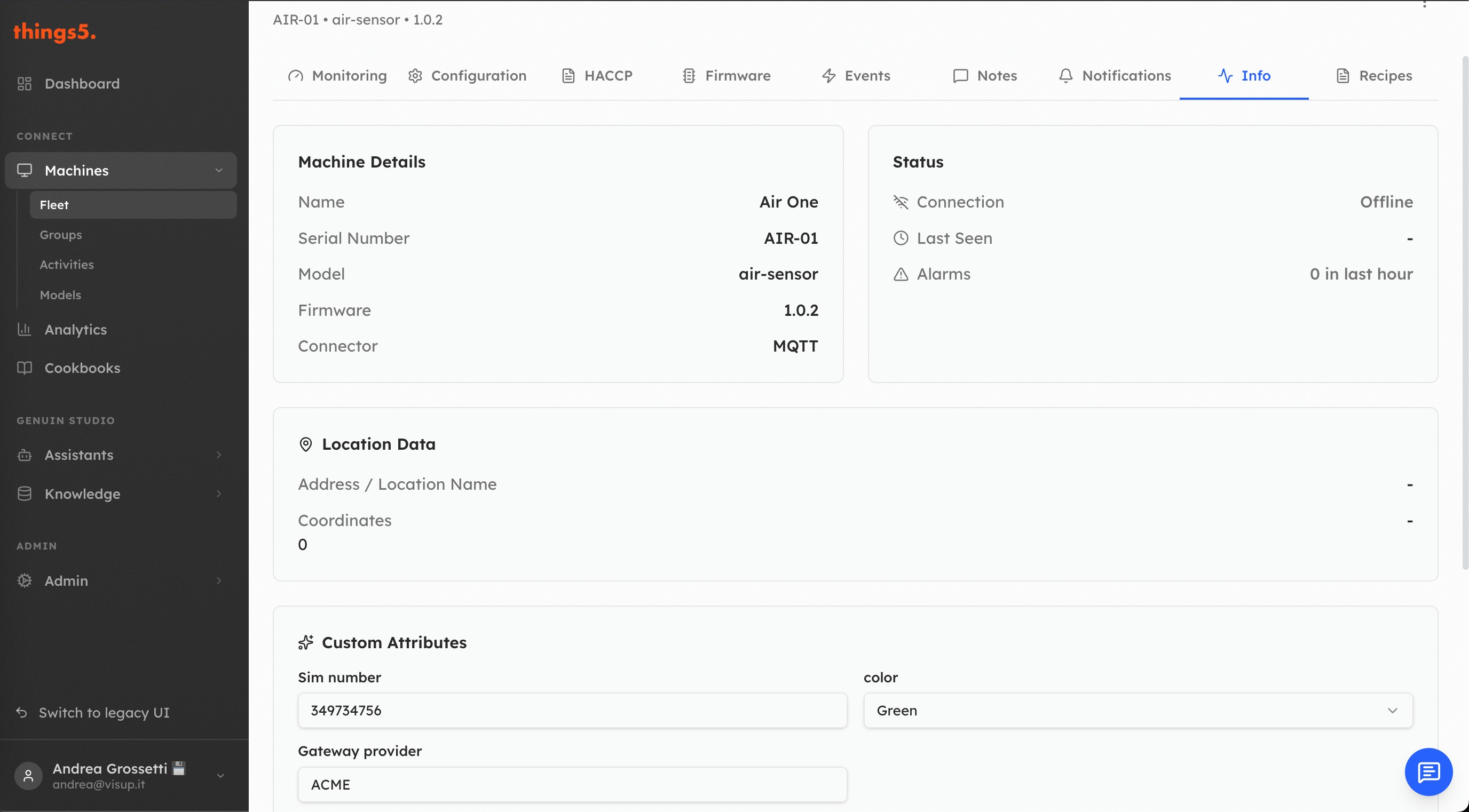
In the machine's Info tab you'll find the "Custom Attributes" section to view and update the values at any time.

The attributes filled in on the machine's Info tab

The attributes filled in on the machine's Info tab